Regulation / Privacy / Strategy
German state DPAs say revised Research Data Act draft still needs work as it widens to health and social data
The Länder supervisory authorities welcome the planned German Centre for Microdata and a criminal research-secrecy rule, but object to retention of up to 50 years and to linking records via the tax ID.
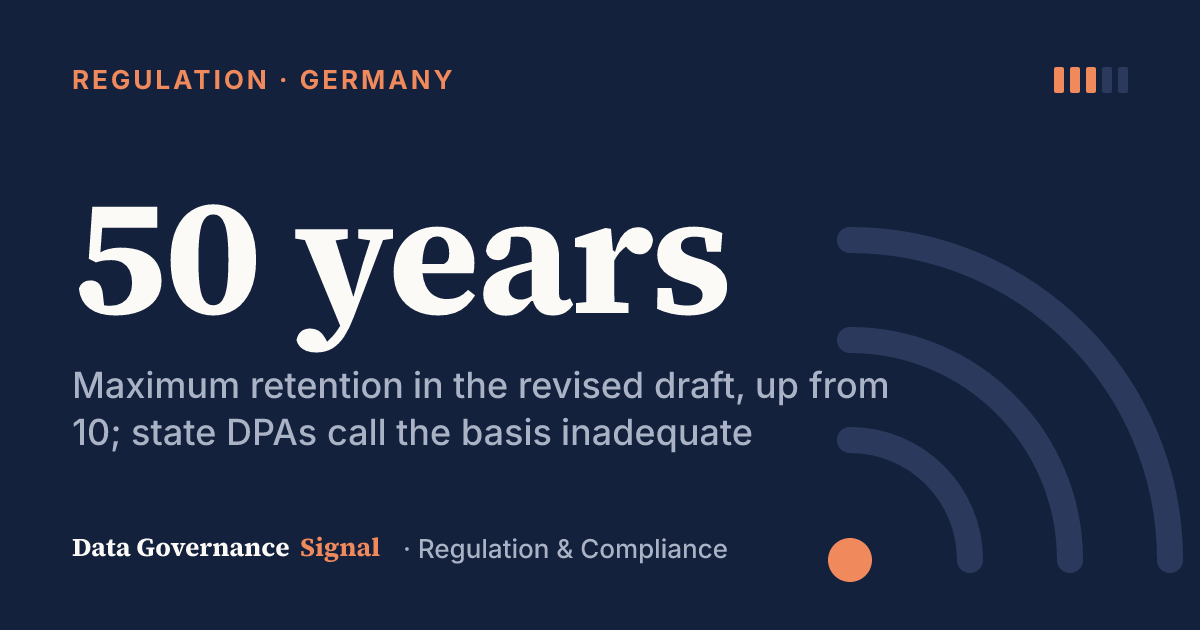
Germany’s independent state (Länder) data protection authorities published a statement dated 25 November 2026 on the research ministry’s revised draft Research Data Act (Forschungsdatengesetz, FDG) of 11 November 2026.
They welcome the planned German Centre for Microdata (DZM) as regulated infrastructure for research access, a research-secrecy rule backed by criminal penalties, a dedicated data protection cockpit and an unconditional right to object. The draft takes up three points from the DSK’s February 2026 statement, including staff separation between the DZM’s trust centre and research unit.
But the authorities say the draft still needs revision, especially as the data to be linked now extends to European Health Data Space health data and social data, often special-category data under Article 9 GDPR. Unresolved concerns include retention of up to 50 years (previously 10), using cross-sector identifiers such as the tax ID to combine records, the lack of a mandatory DPIA for linkage and of an independent multidisciplinary access body, and unclear controller responsibility. Given the short consultation window, they commented only on Article 1 of the bill.
Why it matters
The FDG would give researchers regulated access to linked personal data held across German registers, now including European Health Data Space health data and social data. Research institutions and data-holding bodies should note where the authorities want changes: retention limits, a DPIA before records are combined, an independent multidisciplinary body reviewing access requests, clear allocation of controller responsibility and how GDPR Article 13/14 information duties are met. These points could shape the conditions and documentation that data users will face.
Status: Proposal. Ministry draft dated 11 November 2026; not yet adopted
Sources
Was this useful?
Thanks. What was the problem?
Thank you — this helps us choose what to cover. If you spotted an error, please tell us what it is.
Prepared with AI assistance and reviewed by the editor before publication. Spotted an error? Tell us — see our editorial policy and methodology.
Governance areas
Institutions
Who should care
- DPO
- Legal & compliance
- Research data managers
- CDO