Privacy / Regulation / Metadata
ICO says AI-drafted subject access requests are valid and must be handled like any other request
New UK GDPR guidance covers hallucinated legal references, fake authority letters and metadata requests, and asks organisations to document how they scope a reasonable and proportionate search.
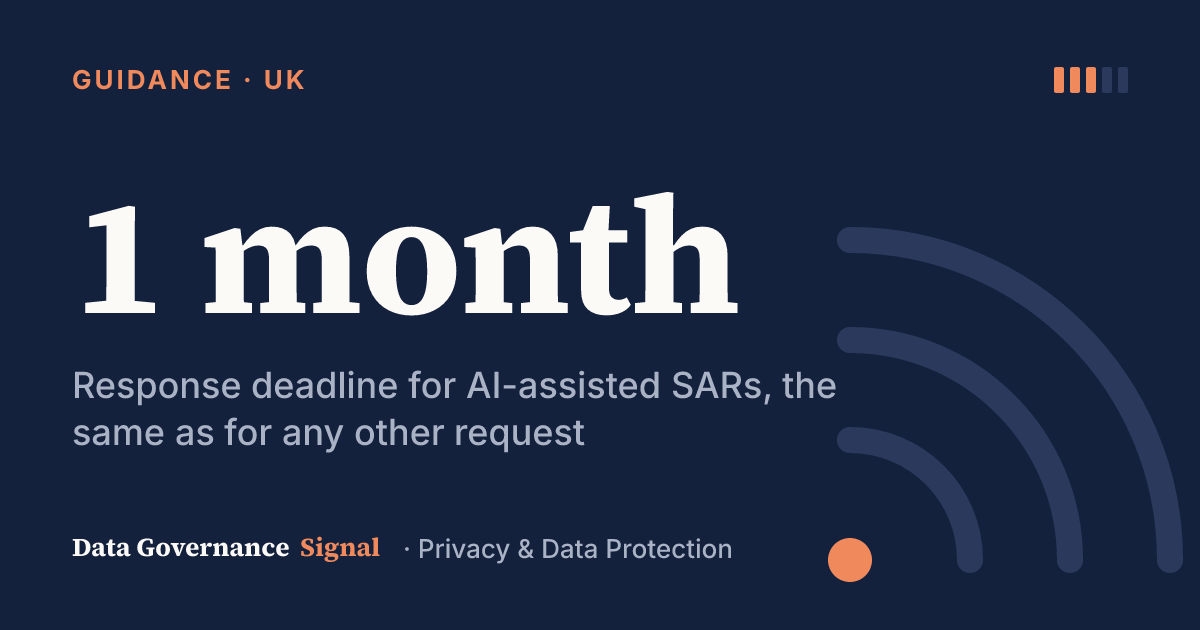
The UK Information Commissioner’s Office published brief guidance on 11 November 2026 on subject access requests (SARs) generated or drafted with AI, covering requests under Article 15 of the UK GDPR.
The ICO’s core position is that using AI does not make a request invalid; what counts is whether the person is clearly asking for their personal information. Inaccurate legal references, foreign laws or non-existent case law do not make a SAR invalid, and a request is not complex simply because it is lengthy, unclear or includes legal references. The usual tools apply: clarification where reasonably required (which pauses the clock), an extension of up to two further months for genuinely complex requests, and refusal or a fee if a request is manifestly unfounded or excessive.
The guidance warns that AI may be used to fake ID or letters of authority, and asks organisations to check correspondence addresses against their records. Requests for specific information such as metadata must be considered, and metadata that identifies the person falls within the SAR’s scope. Elements outside the scope of a SAR need no response under the UK GDPR.
Why it matters
SAR handling teams should review triage rules so that AI-drafted requests are not rejected or labelled complex simply for being long or legally inaccurate. The ICO says organisations should record their decision on the scope of a reasonable and proportionate search, which may include what was included or excluded and why; this depends on knowing where personal data and identifying metadata such as access logs, call records and photo GPS tags are held. Identity and authority verification steps should be updated to account for AI-generated documents and false contact details.
Status: Published. Applies to SARs under Article 15 UK GDPR; Part 3 law enforcement requests handled separately
Sources
Was this useful?
Thanks. What was the problem?
Thank you — this helps us choose what to cover. If you spotted an error, please tell us what it is.
Prepared with AI assistance and reviewed by the editor before publication. Spotted an error? Tell us — see our editorial policy and methodology.
Governance areas
Institutions
Who should care
- DPO
- Legal & compliance
- Data stewards
- Customer service and SAR handling teams