Security / AI Industry / AI Governance
Google reports attackers using multi-agent AI frameworks and stolen LLM credentials at 'machine speed'
Google's latest AI Threat Tracker describes fully automated exploitation pipelines, 'LLMJacking' bills of up to $1 million and backdoors planted through AI coding assistant settings.
Google Threat Intelligence Group (GTIG) and Mandiant have published their latest AI Threat Tracker. According to the report, attackers are moving beyond basic prompting to open source multi-agent frameworks such as ARTEX, CAIRN, CyberStrikeAI and PentAGI to run multi-stage intrusions. GTIG says it saw CAIRN used against targets including the US aerospace sector, and found evidence that a PRC-nexus group was building its own framework for likely espionage use.
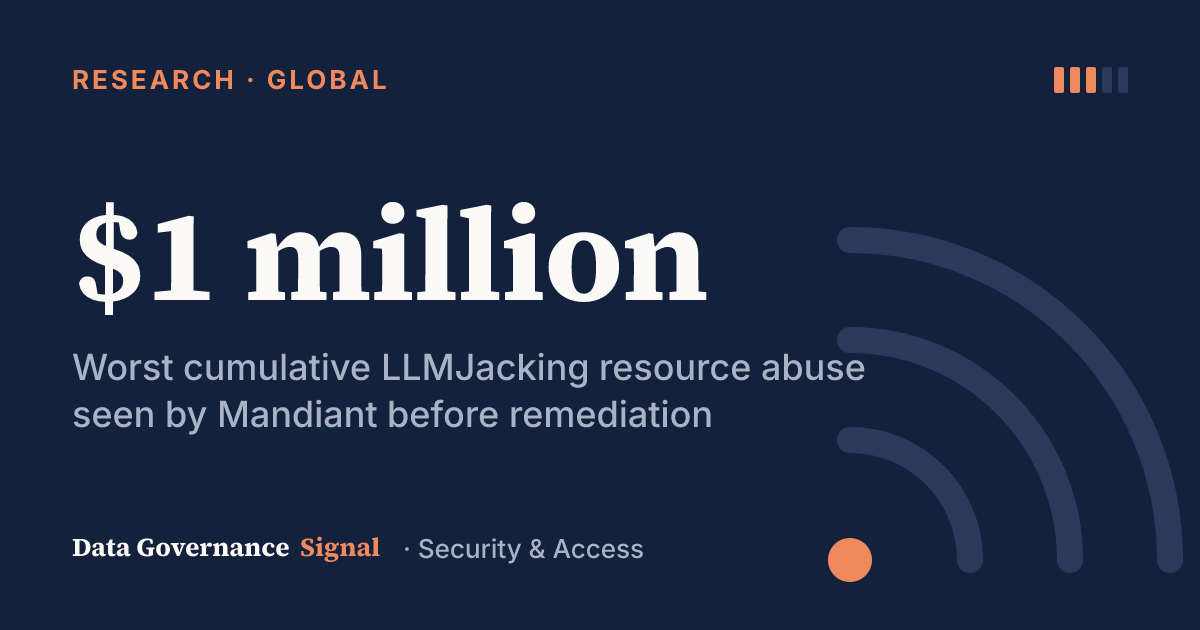
The report says attackers fully automated vulnerability discovery and exploitation without human involvement for the first time last quarter. It also describes ‘LLMJacking’, in which LLM credentials and cloud resources are stolen and access is resold. In some Mandiant cases, single-day fraudulent charges exceeded $100,000, and cumulative abuse reached $1 million in the worst.
A suspected North Korean cluster altered Claude Code configuration files in victims’ repositories so that the tool downloaded a backdoor when it started.
Editor’s note: The findings come from Google’s own threat intelligence report, which also promotes Google security products, and have not been independently verified.
Why it matters
LLM API keys, session tokens and AI quotas are now assets that attackers steal and resell, so they need named owners, an inventory and the same revocation discipline as other privileged credentials. Usage and billing alerts on AI services are a practical early-warning control, since Google reports abuse generating six-figure charges within a day. AI coding assistant configuration files stored in repositories are an execution path and should fall under change control and code review. Faster weaponisation of disclosed flaws also shortens the time available to patch systems that hold personal or sensitive data.
Status: Published. Quarterly threat report from Google Threat Intelligence Group and Mandiant
Sources
Was this useful?
Thanks. What was the problem?
Thank you — this helps us choose what to cover. If you spotted an error, please tell us what it is.
Prepared with AI assistance and reviewed by the editor before publication. Spotted an error? Tell us — see our editorial policy and methodology.
Governance areas
Who should care
- CISO
- AI governance lead
- Data platform owners
- DPO